What STEM Learning Really Means for Young Children (It's Not What You Think)
STEM learning — science, technology, engineering, and math — builds the thinking skills your child needs for life, and the best time to start is right now, from toddlerhood through the primary years.

In this article
Picture this: your eight-year-old sits at the kitchen table, brow furrowed, snapping together coloured circuit pieces for the third time because the buzzer still won't sound. She's not frustrated — she's determined. That moment of productive struggle? That's STEM learning doing exactly what it's supposed to do.
According to the U.S. Bureau of Labor Statistics, STEM occupations are projected to grow by 10.5% between 2022 and 2032 — more than double the average growth rate for all occupations. But here's what that statistic doesn't capture: the real gift of STEM education isn't a job title. It's a way of thinking — curious, methodical, resilient — that serves your child in every corner of life.
In this article, you'll understand:
1. What STEM Learning Really Means for Young Children (It's Not What You Think)
STEM learning for children is not about producing mini engineers — it's about nurturing the habit of asking "why" and "what if." Most parents hear "STEM" and picture complicated robotics kits or coding screens. The reality is far warmer and more accessible than that.
The National Science Teaching Association (NSTA) defines quality STEM education as integrated, inquiry-based learning that connects science, technology, engineering, and mathematics to real-world contexts. For a five-year-old, that might mean watching what happens when you mix baking soda and vinegar. For a ten-year-old, it might mean building a circuit that powers a tiny fan.
Why Integration Matters
When disciplines are taught in isolation — maths here, science there — children struggle to see how knowledge connects. Integrated STEM experiences show children that the same logical thinking that helps them measure ingredients for a recipe also helps them figure out why a bridge they built from craft sticks collapsed.
For families just getting started, the Snap Circuits Beginner Kit is one of the most approachable entry points available: real circuits, real results, age-appropriate safety features, and no soldering required.
2. The Neurological Window: Why Starting Early Changes Everything
The brain is never more receptive to STEM thinking than in the first decade of life, and the research behind this is striking. According to the Center on the Developing Child at Harvard University, 90% of brain development occurs before age five, with neural connections forming at a rate of more than one million per second in the earliest years.
This doesn't mean you should be drilling maths facts to your toddler. It means that exploratory, hands-on play during these years literally shapes the architecture of your child's brain — particularly the prefrontal cortex, which governs planning, problem-solving, and impulse control.
What "Serve and Return" Has to Do With STEM
Harvard's Center on the Developing Child describes a process called "serve and return" — when a child reaches out through babbling, pointing, or playing, and a caregiver responds. This back-and-forth interaction is the foundation of all later learning, including STEM. When you crouch beside your toddler and say "Oh, look — the water went that way when you tilted the cup!" you are building scientific observation skills in real time.
The science of early childhood development shows that the foundation for all later learning, behavior, and health is built in the early years.
— Center on the Developing Child, Harvard University (2016)
3. STEM by Age: Matching Activities to Your Child's Developmental Stage
The single biggest mistake parents make with STEM toys is buying for aspiration rather than development. A kit that's too advanced frustrates and switches children off; one that's too simple bores them within minutes. Getting the match right is everything.
Ages 0–3: Sensory Science
Babies and toddlers are natural scientists. They drop food from highchairs (gravity!), splash in puddles (fluid dynamics!), and stack and knock over blocks (structural engineering!). Your role is to narrate and enrich: "That fell down — I wonder why?" is a perfectly valid STEM lesson.
Ages 3–5: Building and Pattern Play
At this stage, children are ready for simple construction challenges and pattern recognition. The Learning Resources Machine Makers set — with 60 pieces and nine guided STEM challenges — is designed precisely for this age, building real engineering concepts through play inspired by satellites, cranes, and rovers.


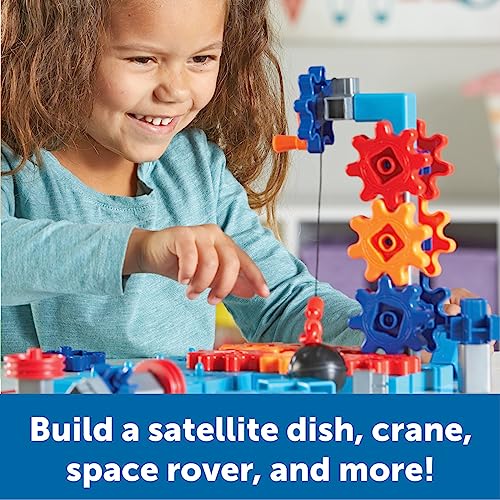
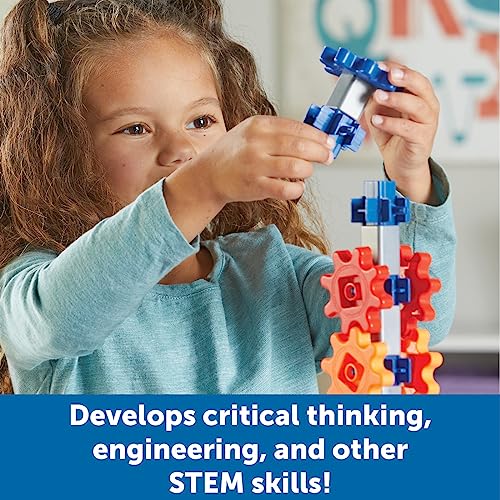
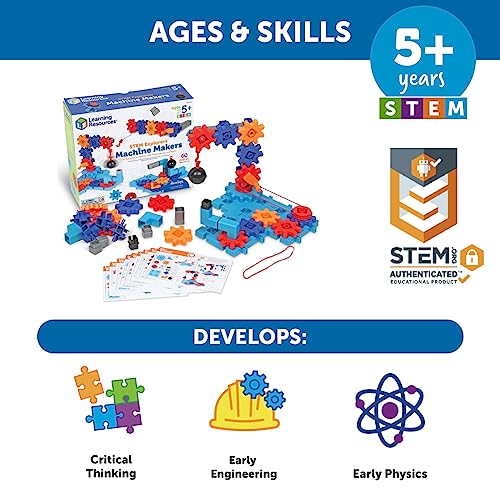
Learning Resources STEM Explorers Machine Makers - 60 Pieces, Ages 5+, Building Montessori Toys, Engineering Activities, Fine Motor Skills
- Solve STEM Challenges: Kids build their own twisting, turning machines as they solve this STEM building toy’s
- Inspired By Real-World Engineering: Whether they're building a satellite dish, crane, space rover, or other ma
- Build Critical Thinking Skills: As they test and tweak their designs, kids will also use this STEM building to
Ages 5–8: Guided Experiments with Real Outcomes
Children in this range are ready for activities with a clear hypothesis and observable result. Growing plants is a perfect example: the Root Viewer Kit by PLANTMEW lets children watch six different seed varieties sprout and grow through a transparent planter — turning patience and observation into a genuine botany experiment.
Ages 8–12: Complex, Multi-Step Projects
This is the sweet spot for electronics kits. Children at this age can follow multi-step instructions, troubleshoot independently, and feel the genuine satisfaction of making something that works.
4. The Hidden Skills STEM Builds (Beyond Maths and Science Grades)
Parents often focus on academic outcomes, but the most powerful effects of STEM learning are the ones you won't see on a report card — at least not directly.
Resilience and a Growth Mindset
When a circuit doesn't work, a plant doesn't sprout, or a structure collapses, children face a choice: give up or try again. STEM activities create low-stakes, high-frequency opportunities to practise persistence. Over time, this rewires how children interpret difficulty — from "I can't do this" to "I haven't figured this out yet."
Dr. Carol Dweck, Professor of Psychology at Stanford University, whose research on growth mindset has been widely cited in education literature, found that children who believe their abilities can grow through effort consistently outperform those who see ability as fixed — regardless of initial skill level.
Collaboration and Communication
Many STEM activities naturally invite teamwork. When two siblings argue about the best way to build a bridge from craft sticks, they are practising negotiation, perspective-taking, and communication — skills that no worksheet can replicate.
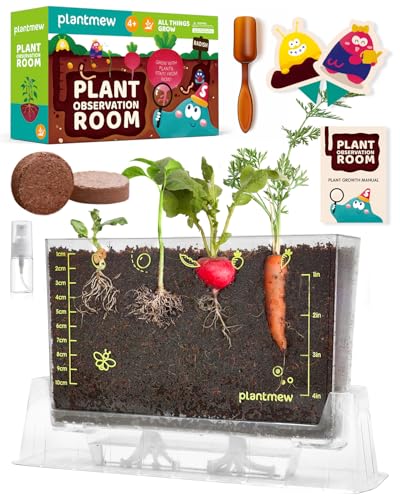

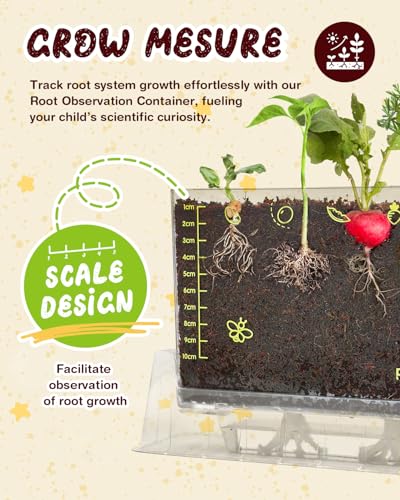
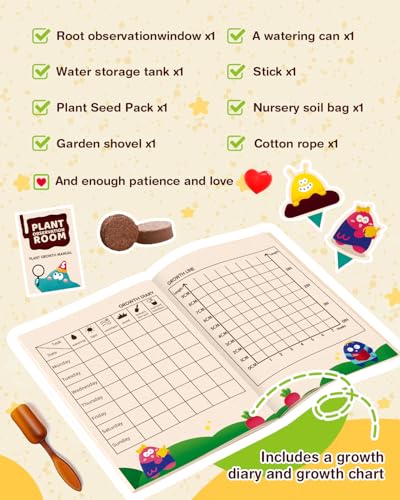
Root Viewer Kit for Kids with 6 Seed Varieties - STEM Science Kits for Kids Age 5-7, 8-12 | Perfect Christmas, Easter, Birthday Gift & School Gardening Project | Learning Educational Gardening Toys
- 🌱 6 Unique Seed Varieties for Endless Fun: Spark curiosity with 6 different seed types—Kidney Bean, Pea, Soya-
- 🌿 Fast & Slow Growers for Lasting Excitement: Some sprout in days (like Radish), others take weeks (like Chili
- 🔍 Discover Roots & Shoots Up Close: From plump Pea roots to feathery Carrot tendrils, each seed reveals unique
5. Choosing the Right STEM Toys: What to Look For (and What to Skip)
The STEM toy market has exploded — and not all of it deserves the label. Some products slap "STEM" on the box without delivering any genuine learning. Here's how to cut through the noise.
The Four Hallmarks of a Genuinely Good STEM Toy
1. Open-ended enough to allow failure and redesign. If there's only one "correct" outcome, it's not really engineering — it's instruction-following.
2. Matched to your child's zone of proximal development. Slightly challenging, not overwhelming. The child should be able to make progress independently with occasional support.
3. Screen-free or screen-light. The American Academy of Pediatrics (AAP) recommends limiting passive screen time for children aged 2–5 and emphasises that hands-on, interactive play remains the gold standard for learning at all ages.
4. Replayable. A good STEM toy gets used more than twice. Kits that allow children to build, dismantle, and rebuild different configurations have far higher value per dollar.
Red Flags to Watch For
For families with children aged 8 and up, the Snap Circuits Jr. SC-100 checks every hallmark: 100+ projects from one kit, fully replayable, no soldering, and a colour-coded manual children can follow independently.

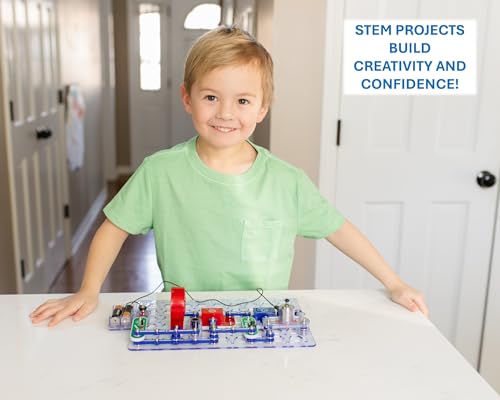
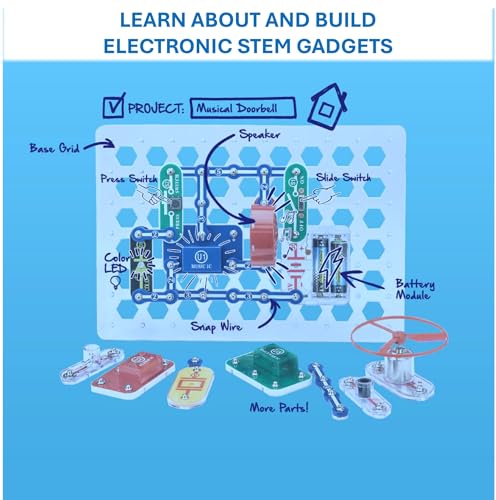
Snap Circuits Jr. SC-100 Electronics Exploration Kit, Over 100 Projects, Full Color Project Manual, 28 Parts, STEM Educational Toy for Kids 8 +
- SO MANY TOYS IN A SNAP: Make dozens of cool electronic gadgets - all from one box! A safe and fun way to intro
- PROJECTS THEY'LL LOVE: So many fun electric-powered projects you can make and play! Ages 8 to 108 will love bu
- GREAT GIFT Give the gift of learning and fun this holiday season! Snap Circuits kits will keep kids busy and h
For a more focused, entry-level experience, the Snap Circuits Flight Deck is a brilliant single-theme kit — children build circuits that launch paper aeroplanes and levitate balls over a fan, making physics viscerally real at a very accessible price point.
6. Building a STEM-Rich Home Environment Without Spending a Fortune
You do not need a dedicated playroom or a large budget to raise a STEM-curious child. The most powerful STEM learning environments are those where curiosity is welcomed daily — not just during "activity time."
The Everyday STEM Mindset
Cooking is chemistry. Gardening is biology. Building flat-pack furniture with your child is engineering. The key is narrating the thinking out loud: "I need to figure out which screws are the right size — how do you think we could work that out?"
Play is the work of childhood.
— Jean Piaget, developmental psychologist, widely cited in early childhood education literature
Creating a Low-Cost STEM Toolkit
You can stock a genuinely rich STEM corner for under $30 with a few well-chosen items:
The Role of Questions Over Answers
Research from the University of Michigan found that children ask an average of 40,000 questions between the ages of two and five. The parents who answer with another question — "That's a great question. What do you think?" — raise children who are more comfortable with uncertainty and more persistent in seeking answers.
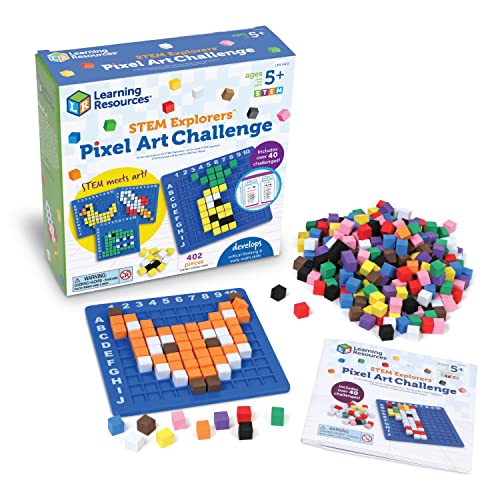
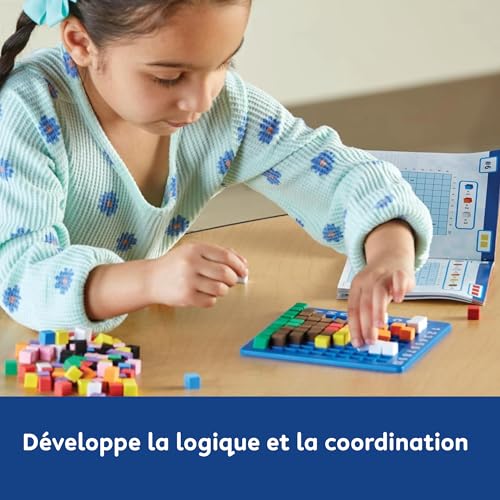


Learning Resources STEM Explorers Pixel Art Challenge - Science Kits & STEM Activities for Kids, Pattern Blocks, Fine Motor Skills, Math Manipulatives, Sorting and Counting, Gifts for Boys and Girls
- HANDS-ON CRITICAL THINKING – Develops problem-solving and spatial reasoning as kids work through 40 creative c
- SCREEN-FREE LEARNING ADVENTURE – Engages children ages 5+ in STEM play that teaches coding concepts and math s
- FINE MOTOR SKILL DEVELOPMENT – Strengthens hand-eye coordination and dexterity as kids place foam pixel pieces
7. Comparison: STEM Learning Approaches and Tools by Age and Goal
| STEM Focus | Best Age Range | Primary Benefits | Main Drawbacks | Recommended Product | Price Range |
|---|---|---|---|---|---|
| Sensory & nature science | 5–8 years | Builds observation, patience, biological thinking | Results take days to weeks | PLANTMEW Root Viewer Kit | ~$20 |
| Screen-free coding & pattern logic | 5+ years | Develops computational thinking without screens, fine motor | Limited to pattern/logic challenges | Learning Resources Pixel Art Challenge | ~$20 |
| Beginner electronics | 5–9 years | Real circuits, safe design, builds confidence fast | Fewer projects than advanced kits | Snap Circuits Beginner | ~$20 |
| Mechanical engineering & building | 5+ years | Physics principles, creative construction, 9 structured challenges | Smaller piece count than open-ended sets | Learning Resources Machine Makers | ~$25 |
| Intermediate electronics | 8+ years | 100+ projects, high replayability, independent use | Requires reading ability for manual | Snap Circuits Jr. SC-100 | ~$27 |
| Physics & aerodynamics | 8+ years | Tangible physics (air pressure, lift), great entry price | Narrower theme, fewer projects | Snap Circuits Flight Deck | ~$15 |
8. What the Experts Say: Research-Backed Insights on STEM and Child Development
The science on early STEM engagement is both robust and reassuring. You don't need to be a scientist to give your child a significant advantage — you just need to be present and curious alongside them.
These perspectives converge on a single truth: the window of opportunity is open right now, and the tools don't need to be complicated. A transparent planter, a set of snap-together circuits, or a box of pixel art pieces can be the beginning of a lifelong relationship with discovery.
Conclusion
Every time your child crouches over a sprouting seed, snaps a circuit together for the fourth time, or redesigns a structure that just fell down, they are practising the most important skill a human being can have: the belief that the world is knowable, and that they can figure it out.
STEM learning isn't a subject. It's a lens — and once your child learns to look through it, they carry it everywhere. The investment you make now, in the right activities, the right questions, and the right environment, doesn't just prepare them for a future career. It shapes the kind of thinker, problem-solver, and person they become.
As the saying goes: we are raising the people who will solve problems we haven't imagined yet. Give them the tools to start today.
If this article helped you, save it, share it with another parent, or subscribe to tinymindsworld.com for more research-backed guidance on raising curious, capable kids.
Sources & References
- U.S. Bureau of Labor Statistics. "Occupational Outlook Handbook: STEM Occupations." 2023. https://www.bls.gov/ooh/architecture-and-engineering/
- Center on the Developing Child, Harvard University. "The Science of Early Childhood Development." 2016. https://developingchild.harvard.edu
- National Science Teaching Association (NSTA). "STEM Education Position Statement." 2021. https://www.nsta.org/nstas-official-positions/stem-education
- American Academy of Pediatrics (AAP). "Media and Young Minds." Pediatrics, 2016. https://doi.org/10.1542/peds.2016-2591
- Afterschool Alliance. "STEM Learning in Afterschool: An Analysis of Impact and Outcomes." 2014. http://www.afterschoolalliance.org
- Dweck, Carol S. "Mindset: The New Psychology of Success." Random House, 2006.
- Duncan, Greg J. et al. "School Readiness and Later Achievement." Developmental Psychology, Vol. 43, No. 6, 2007. https://doi.org/10.1037/0012-1649.43.6.1428
- Hirsh-Pasek, Kathy, and Golinkoff, Roberta Michnick. "Einstein Never Used Flash Cards." Rodale Books, 2003.
- Learning Policy Institute. Linda Darling-Hammond profile and research publications. https://learningpolicyinstitute.org
- Piaget, Jean. "The Origins of Intelligence in Children." International Universities Press, 1952.
Frequently Asked Questions
At what age should I introduce STEM activities to my child?
Do STEM toys need to involve screens or technology?
How do I keep my child engaged with STEM activities without it becoming a chore?
Are STEM toys worth the money? How do I choose wisely?
My child gets frustrated and gives up quickly. Is STEM right for them?
Can STEM activities help children with different learning styles?
How much time should my child spend on STEM activities each week?
Was this helpful?
Thanks — your feedback helps us pick what to write next.