Rocking Your Baby to Sleep: Why It May Backfire
Rocking your baby to sleep feels natural and kind, but it can teach your baby to rely on motion as the only way to fall asleep, making night wakings harder to handle over time.

In this article
Introduction
You are doing everything right. You scoop up your baby, you rock, you sway, you sing under your breath. Within minutes those heavy eyelids close and you feel, genuinely, like a superhero. Then at 2 a.m. the screaming starts again, and again at 3:30, and at 5:15. You rock. They sleep. You put them down. They wake. Repeat until sunrise.
If that loop sounds familiar, you are not alone. Research published in the journal Sleep Medicine found that up to 60 percent of infant sleep problems brought to paediatric clinics are linked to what sleep scientists call "sleep onset associations," which means your baby has learned to fall asleep only under specific conditions they cannot recreate on their own.
Rocking is one of the most common of those conditions, and it is one of the hardest to spot as a problem precisely because it works so beautifully in the short term.
In this article you will understand:
1. Why Rocking Puts Babies to Sleep: The Science Behind the Sway
Rocking works because it taps into your baby's nervous system at a biological level, not simply because it feels nice. The vestibular system, the inner ear structures that detect movement and balance, is one of the first sensory systems to mature in a developing baby. It is active from around 16 weeks gestation, which means your baby has been responding to rhythmic motion since long before birth.
When you rock your baby, you stimulate the vestibular system in a slow, rhythmic way. This activates a calming reflex that slows heart rate, lowers arousal, and nudges the brain toward sleep. A landmark 2022 study published in Current Biology by researchers at the University of Geneva found that rocking adults in a swinging bed both shortened the time it took them to fall asleep and increased slow wave (deep) sleep. A parallel experiment with infant mice produced the same results, and the researchers identified a specific neural pathway in the brainstem connecting vestibular input to sleep promoting circuits.
We think rocking synchronizes brain activity, particularly in the areas involved in sleep regulation, by providing rhythmic sensory input.
— Laurence Bayer, University of Geneva, Current Biology (2022)
So rocking is not just soothing in a vague, emotional sense. It is neurologically sleep promoting. That is exactly what makes the habit so easy to build and so tricky to undo.
The heartbeat connection
There is also a strong auditory and proprioceptive component. Your baby spent nine months hearing your heartbeat at roughly 60 to 80 beats per minute, feeling the rhythmic rise and fall of your breathing, and being gently jostled by your movement. Rocking recreates several of those sensations simultaneously. It is, in the most literal sense, familiar. Your baby's brain reads it as "safe, calm, time to sleep."
The trouble, as we will see, comes not from the rocking but from what the baby learns about what makes sleep possible.
2. Sleep Onset Associations: How a Helpful Habit Becomes a Night Waking Trap
Here is the mechanism that turns a loving bedtime ritual into a 3 a.m. problem. Every human, adult or baby, moves through sleep in cycles. For a baby under six months those cycles run roughly 45 to 50 minutes. For babies between six and twelve months, cycles lengthen to around 60 to 90 minutes. At the end of each cycle, everyone briefly arouses to a lighter sleep state. Adults do this without noticing. Babies do too, unless they cannot find the conditions that were present when they originally fell asleep.
This is the concept of a sleep onset association, and it is central to understanding why your rocking routine may be working against you.
If your baby fell asleep in your arms while rocking, their brain tagged "being rocked" as the condition required for sleep. When they rouse at the end of a sleep cycle, they are not in your arms. They are not moving. The condition is gone. Their brain registers this as a problem, and they call for help.
Sleep associations are formed through classical conditioning. The baby learns that certain cues predict sleep, and without those cues, sleep cannot be reinitiated.
— AAP Section on Sleep Medicine, American Academy of Pediatrics
This is not manipulation. It is neuroscience.
Parents sometimes feel their baby is "playing them" or being deliberately difficult at 2 a.m. They are not. They are doing exactly what their brain has learned to do. They are looking for the cues that have always predicted safety and sleep. Rocking is just the cue you accidentally set.
This also explains why some babies seem to sleep "fine" at three months and then become terrible sleepers at four or five months. In early infancy, babies spend proportionally more time in REM sleep and transition between states less sharply. As the brain matures around the four month mark, sleep architecture shifts to look more like adult sleep, with clearer, more defined cycles. That is when the sleep onset association problem often bites hardest.
Understanding what your baby is going through emotionally during these night wakings is worth reading about. You can get a good grounding in how babies experience emotions in the first year to help you respond with confidence rather than guilt.
3. The Evidence on Rocking: What Research Actually Shows
The scientific picture on rocking is more nuanced than most sleep advice articles suggest. Rocking is not inherently harmful. In fact, a significant body of research shows it offers real benefits, particularly in the early weeks. The issue is timing and degree.
Where the evidence supports rocking
For newborns, skin to skin contact and motion have documented benefits. A Cochrane review on non-pharmacological interventions for infant colic found that rhythmic motion significantly reduced crying duration in babies under three months. The National Institute for Health and Care Excellence (NICE) guidelines in the UK acknowledge that responsive holding and movement are appropriate settling strategies in the newborn period.
A 2023 study in the Journal of Sleep Research found that parental rocking at bedtime was associated with faster sleep onset in infants under four months, with no significant negative outcomes at that age. The researchers noted, however, that continued rocking at bedtime beyond the four month mark was associated with more frequent night waking at six months.
Where the evidence turns cautionary
The same Journal of Sleep Research study found that babies who were rocked to full sleep (rather than drowsy but awake) at bedtime at four to six months had significantly more night wakings at nine months compared to babies whose parents had moved toward a "drowsy but awake" approach.
A large scale cohort study published in JAMA Pediatrics tracking over 1,400 families found that parental presence at sleep onset, which included rocking, feeding, and holding to sleep, was the single strongest predictor of frequent night waking and short sleep duration at twelve months.
4. White Noise as a Bridge: Replacing Motion With Sound
If rocking is a sensory sleep trigger that can become a trap, the good news is that other sensory inputs can serve as sleep anchors without the dependency problem. White noise is the one with the strongest evidence base, and it is the most practical tool for parents trying to wean a baby off motion.
White noise works differently from rocking. Rather than actively inducing sleep by stimulating the vestibular system, it creates a consistent acoustic environment that masks the sudden sounds (a door, a car, a sibling) that interrupt light sleep and trigger full waking. It also mimics the constant, low frequency whooshing sound of blood flow through the uterus, which is estimated to be around 80 to 85 decibels, roughly as loud as a vacuum cleaner.
A randomised controlled trial published in the Archives of Disease in Childhood found that 80 percent of newborns fell asleep within five minutes when white noise was played, compared to 25 percent in the control group. A later study in the same journal found white noise reduced nighttime waking frequency in four to eight month olds.
What to look for in a sound machine
Not all white noise machines are equal. For sleep purposes you want:

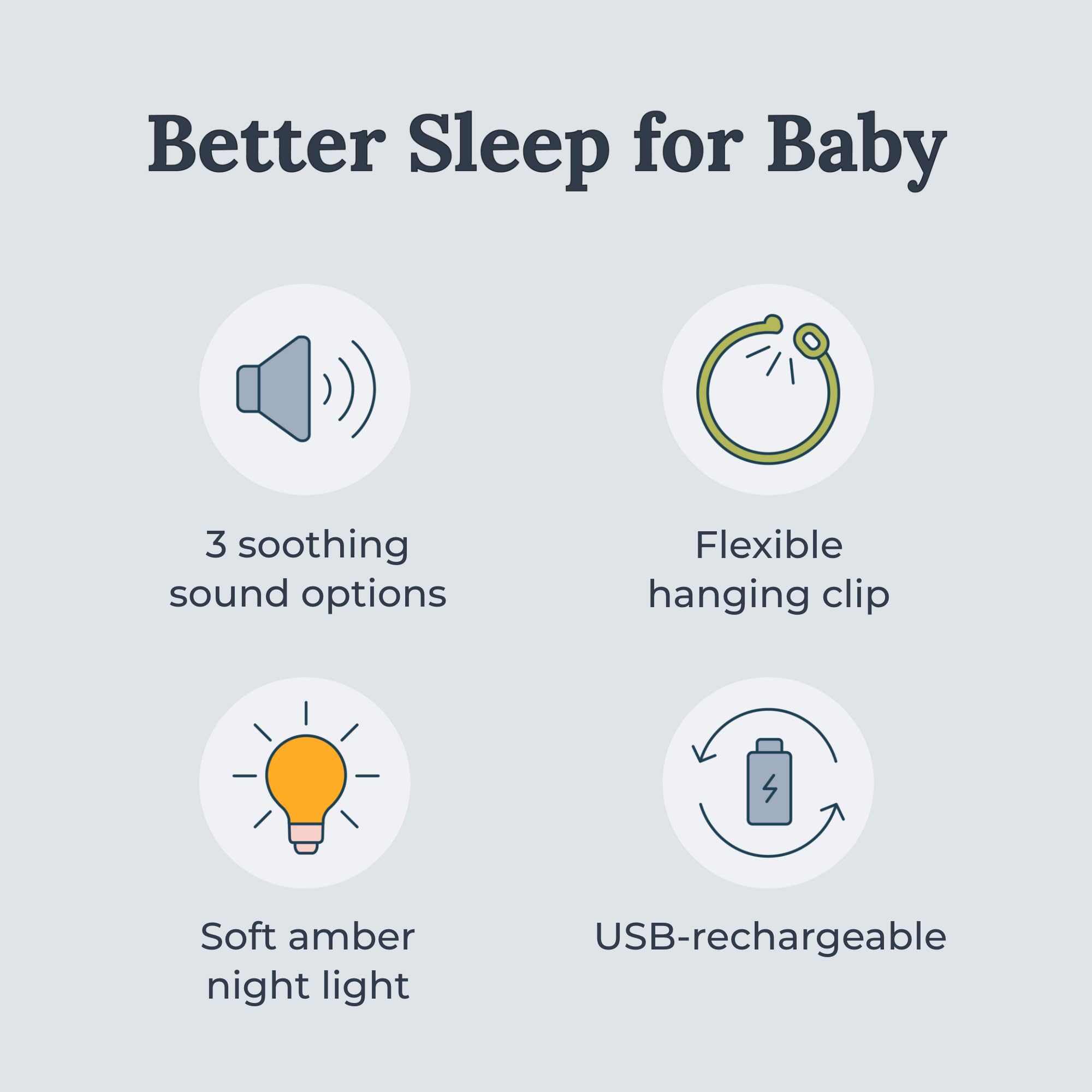

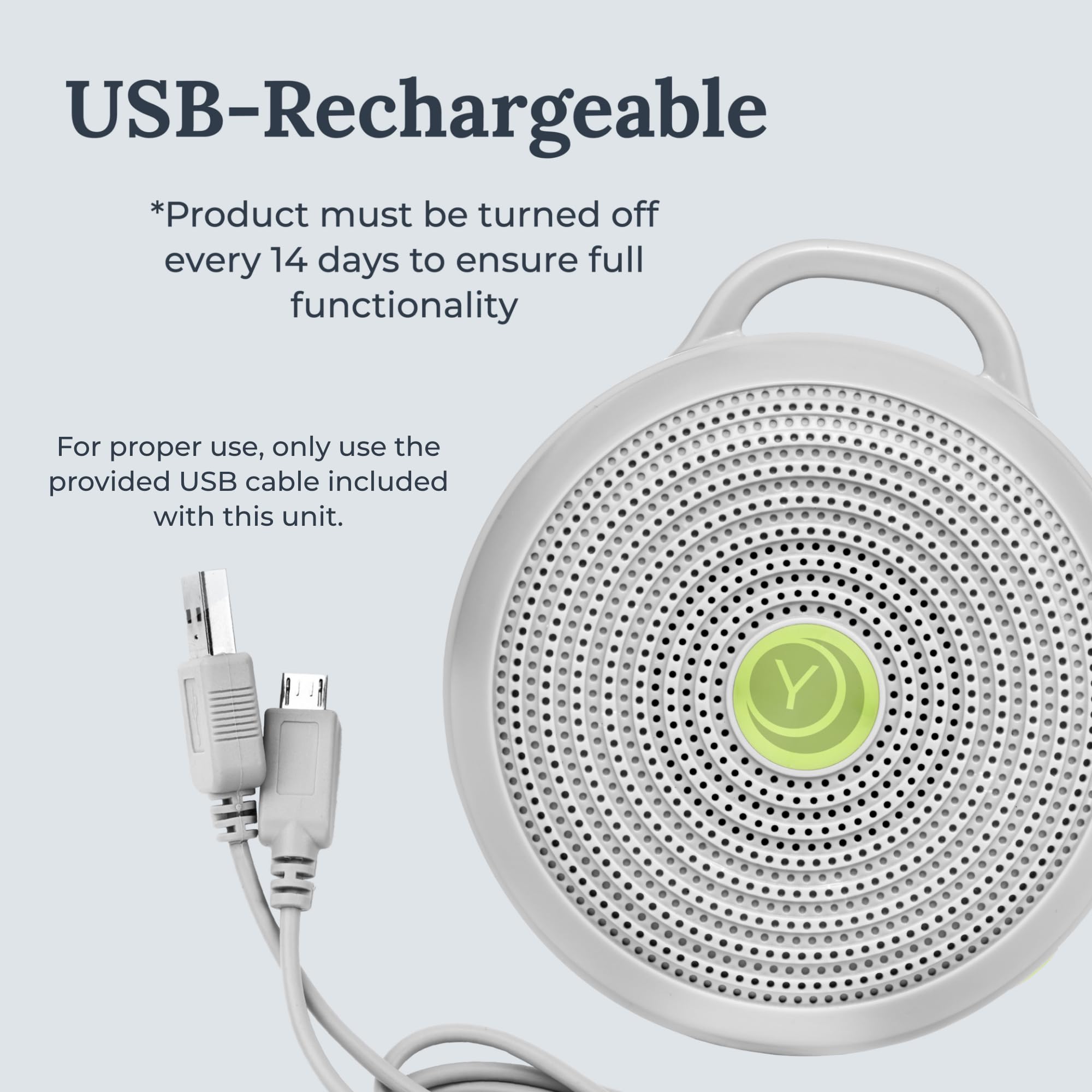
Yogasleep Hushh Portable White Noise Sound Machine for Baby, 3 Soothing Natural Sounds with Volume Control, Compact Size, Noise Canceling for Sleep Aid, Office Privacy, & Meditation, Registry Gift
- EFFECTIVELY MASKS NOISE: Beloved by generations since 1962, Yogasleep is the trusted leader in white noise mac
- 3 SOOTHING SOUNDS: Take control of your sound environment and choose from three calming sounds: bright white n
- NIGHT LIGHT: The Hushh's gentle amber LED night light emits just enough of a glow to comfort and guide you in
The Yogasleep Hushh is a solid entry point. It clips directly onto a buggy or cot rail, runs from a rechargeable battery, and offers three distinct sounds including both bright and deep white noise. Yogasleep has been making these machines since 1962, which means there is a generation of parents who used one themselves.
For families who want more sound variety, the Dreamegg D11 Max offers 21 sounds, a child lock, and an impressively large 1800 mAh battery that genuinely lasts through the night and into daytime naps.
![Portable Baby Sound Machine [White Noise for Babies Kids Adults][Timer Function][12 Soothing Sounds][Sleep Soother] 15 Hours Battery Life, Travel,Registry,Gifts,Shower,Clips on Baby Stroller](https://m.media-amazon.com/images/I/612-i8iioGL.jpg)
![Portable Baby Sound Machine [White Noise for Babies Kids Adults][Timer Function][12 Soothing Sounds][Sleep Soother] 15 Hours Battery Life, Travel,Registry,Gifts,Shower,Clips on Baby Stroller](https://m.media-amazon.com/images/I/71MtVJ-2jxL.jpg)
![Portable Baby Sound Machine [White Noise for Babies Kids Adults][Timer Function][12 Soothing Sounds][Sleep Soother] 15 Hours Battery Life, Travel,Registry,Gifts,Shower,Clips on Baby Stroller](https://m.media-amazon.com/images/I/6193sXE3TDL.jpg)
![Portable Baby Sound Machine [White Noise for Babies Kids Adults][Timer Function][12 Soothing Sounds][Sleep Soother] 15 Hours Battery Life, Travel,Registry,Gifts,Shower,Clips on Baby Stroller](https://m.media-amazon.com/images/I/71k7nFWOk2L.jpg)
![Portable Baby Sound Machine [White Noise for Babies Kids Adults][Timer Function][12 Soothing Sounds][Sleep Soother] 15 Hours Battery Life, Travel,Registry,Gifts,Shower,Clips on Baby Stroller](https://m.media-amazon.com/images/I/71tqI4tVpfL.jpg)
Portable Baby Sound Machine [White Noise for Babies Kids Adults][Timer Function][12 Soothing Sounds][Sleep Soother] 15 Hours Battery Life, Travel,Registry,Gifts,Shower,Clips on Baby Stroller
- White noise on the go: Portable sound machine with 12 kinds of the most soothing white noise can carry everywh
- USB charging port for worry-free charging anytime: With a minimum 15-hour ultra-long battery life, it ensures
- Timer function: Start the timer function according to the manual, and it can be automatically turned off after
The Jaroco clip-on machine is another practical option for travel, with 12 sounds, a timer function, and USB-C charging. At $15.99 it is a low stakes way to trial white noise before committing.
5. How to Transition Away From Rocking Without Leaving Your Baby to Cry
The most common fear parents have when they read about sleep associations is that fixing the problem means leaving their baby alone to cry. It does not. There are several well researched approaches that sit comfortably between "rock until 11 p.m. every night forever" and "close the door and hope for the best." The key is gradual, consistent change.
The fading method
This is the approach most consistent with the evidence on infant distress. You reduce the degree of rocking gradually, over seven to fourteen nights, rather than stopping abruptly.
Night 1 to 3: Rock your baby to drowsy but awake. Place in cot. Stay with your hand on their chest. Night 4 to 6: Rock to drowsy. Place in cot. Sit beside the cot but do not touch. Night 7 to 9: Rock briefly (two to three minutes rather than until drowsy). Place in cot. Sit further away. Night 10 onward: Brief cuddle rather than rocking. Cot with you in the room until asleep.
The rationale is that you are shifting the "last thing they remember before sleep" from motion in your arms to lying still in their own space. This takes time and consistency, but it does not require your baby to experience prolonged distress.
Pairing with white noise
This is where the transition becomes noticeably easier for most families. Start playing white noise during your rocking routine, before you begin the gradual fade. After a week, your baby's brain begins to associate the sound with sleep, not just the rocking. The white noise then acts as a bridge: when rocking is reduced, the sound cue is still present and still signalling sleep.
The Hushing mini sound machine is an excellent choice for this phase. It has 30 non-looping sounds, 32 volume levels, and a 32 hour battery so you are not hunting for a charger at midnight.
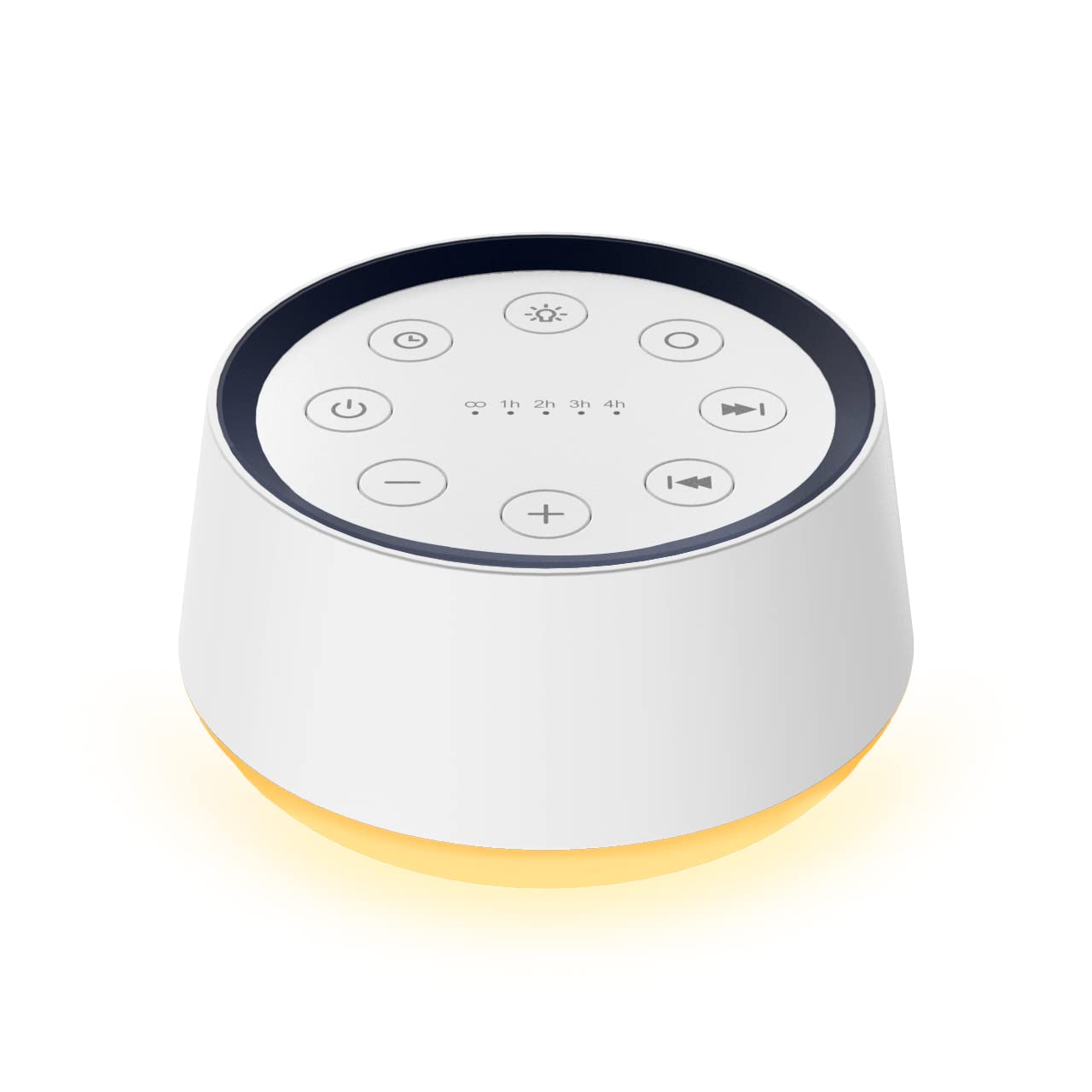


Brown Noise Sound Machine with 30 Soothing Sounds 12 Colors Night Light White Noise Machine for Adults Baby Kids Sleep Machines Memory Function 36 Volume Levels 5 Timers for Home Office Travel
- ❤[30 Natural and Soothing Sounds] Our white noise machine provides 30 soothing sounds, including 3 Brown noise
- ❤[12 Night Light Colors] Sound machine with 12 kinds of light color, to suit your personal preferences at any
- ❤[10 Adjustable Levels Night Light] An adjustable soft lighting creates a comfortable sleeping atmosphere for
If you would like night feeds and comfort checks to feel less alarming in the dark, the BrownNoise machine with its 12 colour night light is worth considering. The adjustable amber glow means you can check on your baby without switching on a lamp and triggering a full wake.
6. When Rocking Is Still the Right Call
Everything above about sleep onset associations is true and evidence-grounded, and yet it would be dishonest to write 5,000 words telling parents to stop rocking without making this section very clear. There are absolutely situations where rocking remains not just acceptable but the right and compassionate response.
Under four months
The research is consistent here. For babies under four months, the benefits of responsive holding, including rocking, outweigh the risks of building a sleep association. At this age, the goal is not independent settling. It is regulation. Newborns cannot self-regulate their nervous systems. Your presence, your warmth, your rhythmic motion, those are not spoiling your baby. They are doing the job of the still-developing self-regulation circuitry.
The American Academy of Pediatrics, in its safe sleep guidelines, explicitly supports responsive caregiving in the newborn period. It is only as babies approach the four to six month window that the AAP begins to recommend supporting independent sleep onset.
During illness
Any time your baby is unwell, including teething flares, ear infections, or post-vaccination unsettled periods, their need for comfort rises sharply and their developmental progress in sleep takes a back seat. Rock freely. You will not undo months of progress in one difficult week.
During developmental leaps and regressions
Sleep regressions, those frustrating periods where a previously reasonable sleeper suddenly wakes constantly, are driven by developmental change in the brain, not by a habit problem. If your baby is in the thick of a regression, understanding what drives those disrupted nights can help you ride it out without panicking or permanently reverting to habits you have worked to change.
When you need sleep too
Parent exhaustion is a genuine safety risk. If rocking is the only thing that will get everyone back to sleep at 3 a.m. and you have to function tomorrow, rock. The goal is a sustainable system, not a perfect system. Progress over perfection, always.
For parents who are finding the whole settling process overwhelming, having a broader toolkit helps. The strategies in this overview of infant sleep soothing methods can complement what you are learning here and give you something to reach for when rocking alone is not cutting it.
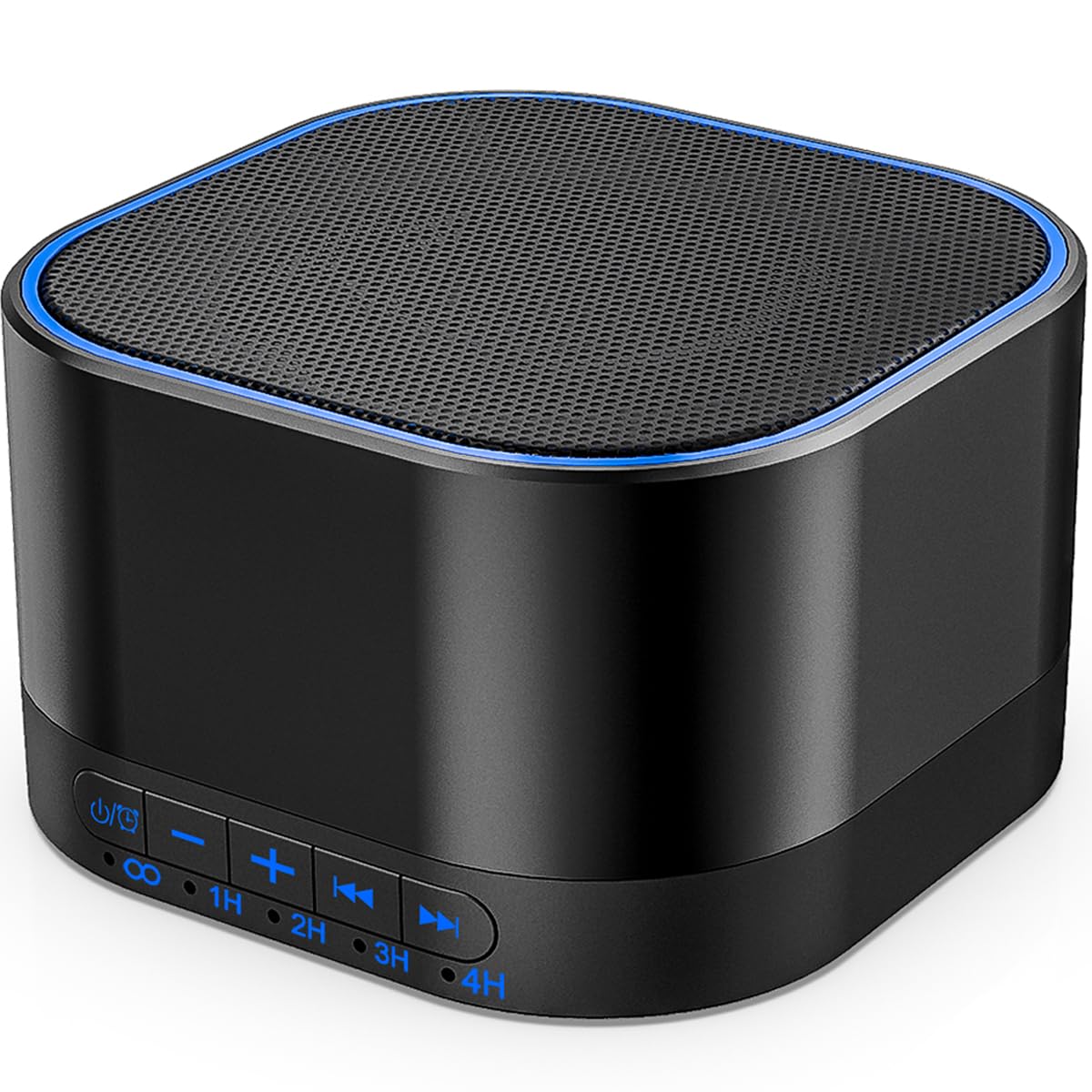

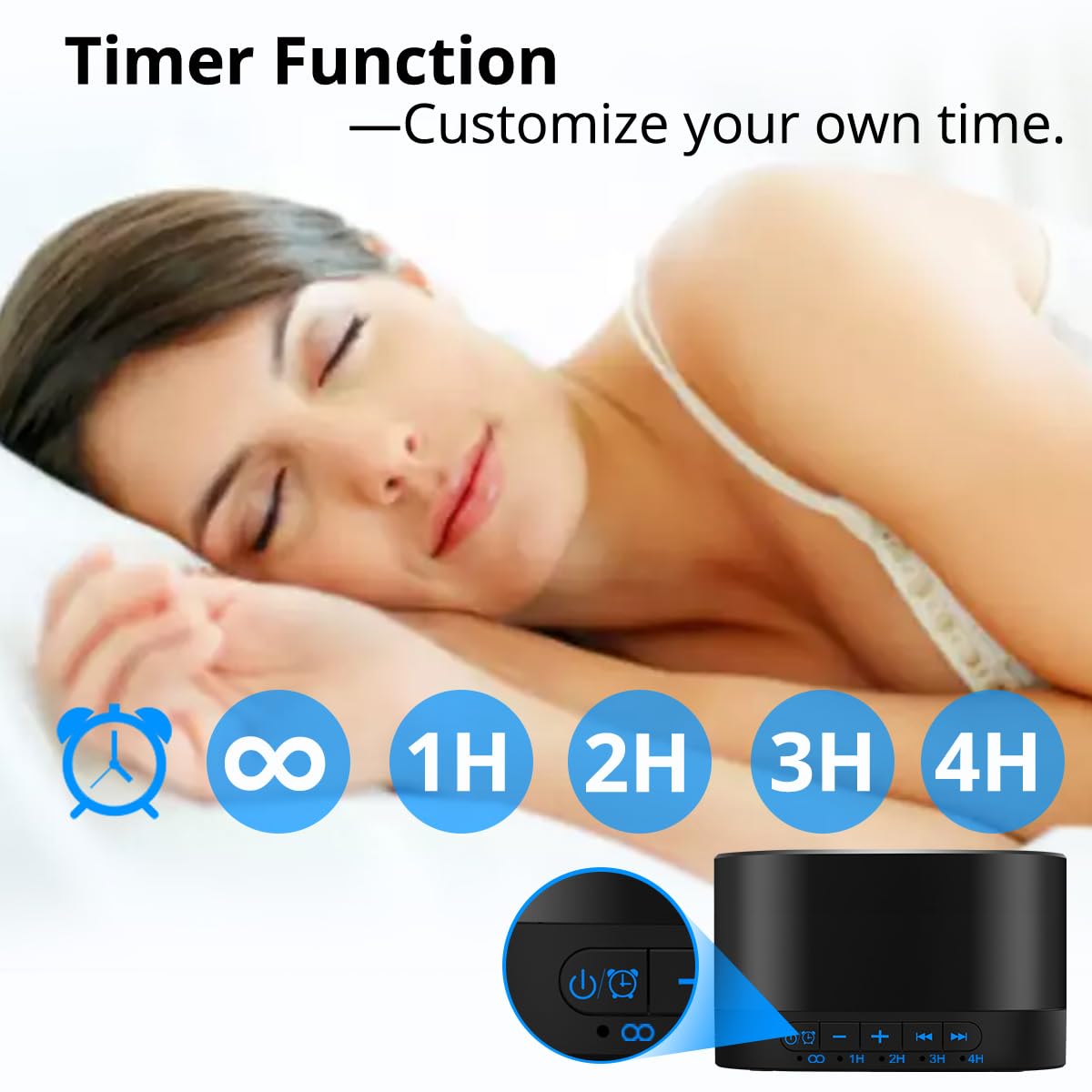
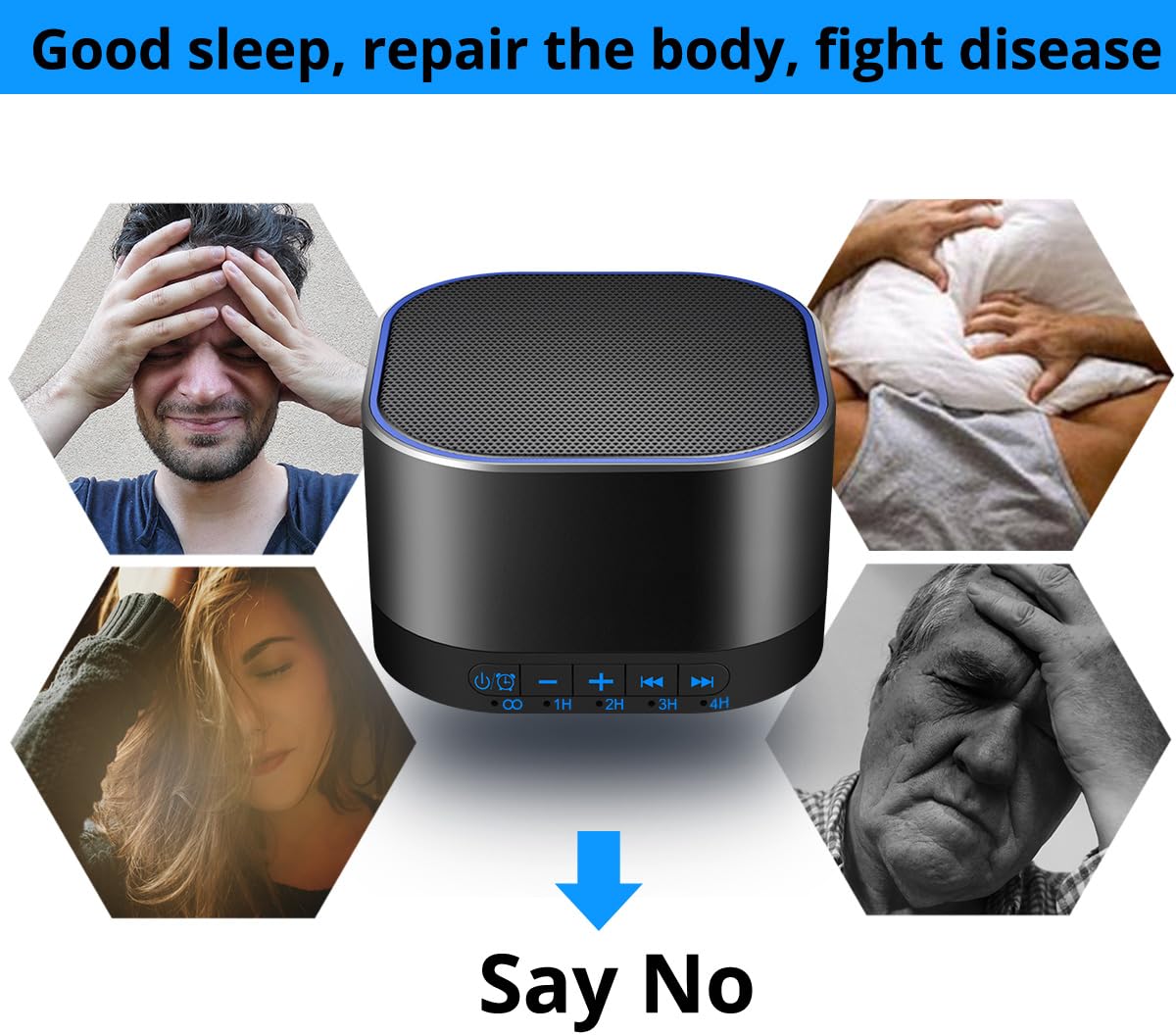
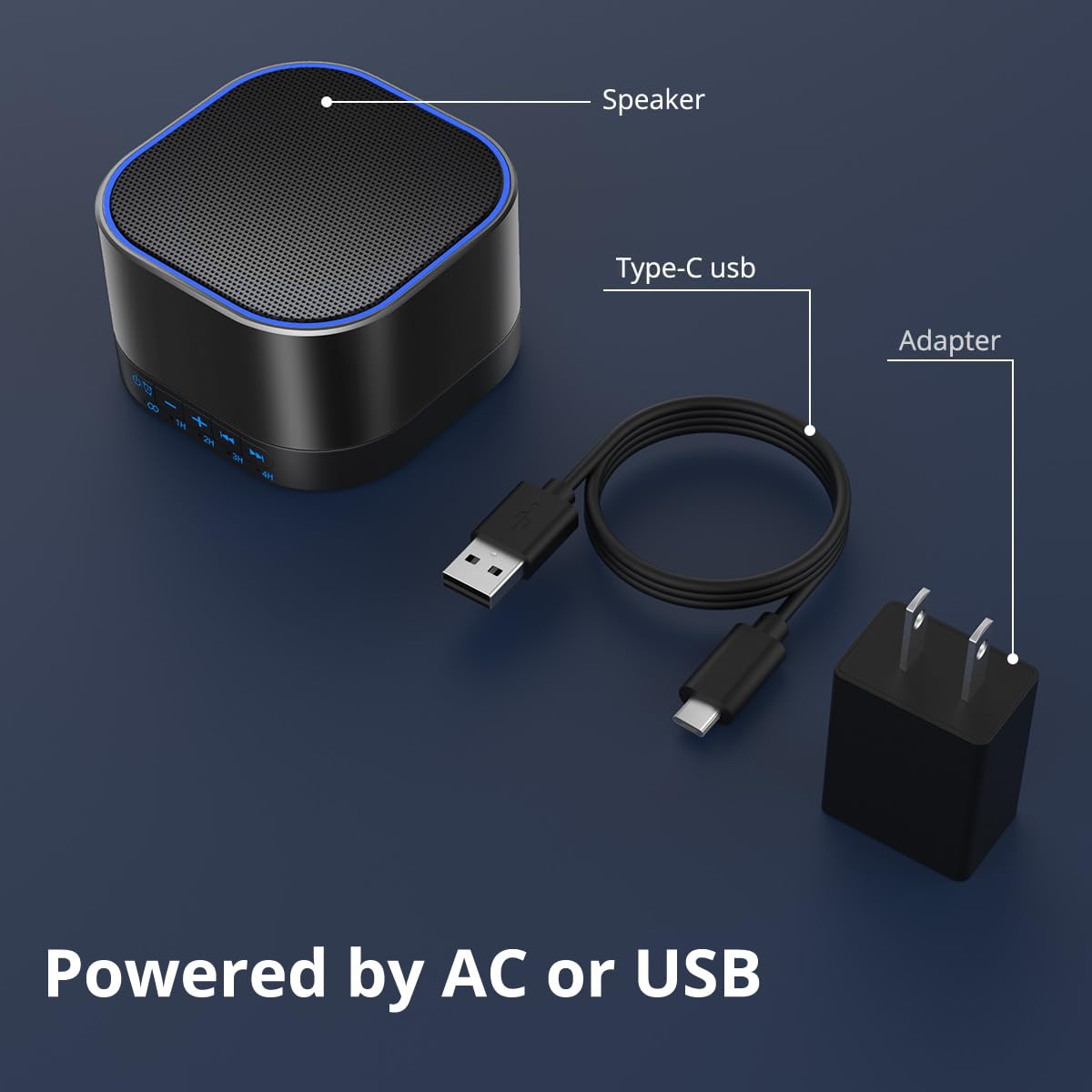
Magicteam Sound White Noise Machine with 20 Non Looping Natural Soothing Sounds and Memory Function 32 Levels of Volume Powered by AC or USB and Sleep Sound Timer Therapy for Baby Kids Adults
- ❤20 Non-Looping Sleep Sounds: White noise ,Brown noise, pink noise, blue noise, fan,brook, rain, ocean,bird an
- ❤Precise Volume & Timer Settings:With 32 Levels of Volume ,it is perfect for baby sleeping .And you can set 1
- ❤Unique Design: Solid-state design with 3.01inch*3.01inch *1.77inch,it is portable for home, office or travel,
The Magicteam white noise machine is a reliable, plug-in option for the nursery. With 20 non-looping sounds and 32 volume levels, it handles everything from a fussy four month old to a toddler who needs help sleeping through a noisy household.
Comparison of Sleep Settling Approaches: What Works, When, and What to Use
| Settling Method | Best Age Range | Primary Benefits | Main Drawbacks | Recommended Product | Price Range |
|---|---|---|---|---|---|
| Rocking to full sleep | 0 to 3 months | Neurologically calming, matches newborn needs | Creates sleep onset association after 4 months | Jaroco clip-on sound machine | $16 |
| Rocking to drowsy, then cot | 3 to 6 months | Bridges transition to independent settling | Requires consistency; tricky with overtired babies | Dreamegg D11 Max | $20 |
| White noise plus cot settling | 4 to 12 months | Portable, continuous cue; no dependency trap | Takes a week to pair with sleep; some babies prefer motion | Yogasleep Hushh | $26 |
| Fading method | 5 to 12 months | Gradual, no prolonged crying | Slower than cry-it-out; needs 7 to 14 nights | Hushing mini sound machine | $17 |
| Chair method (Ferber variant) | 6 to 12 months | Parent visible; reduces anxiety for baby | Parental presence can increase protest in some babies | BrownNoise night light machine | $23 |
| Responsive settling (pick up, put down) | 4 to 8 months | Fully responsive; no distress | Time intensive; can over-stimulate some babies | Magicteam sound machine | $23 |
Expert Insights
Conclusion
There are very few things in early parenthood as instinctive as rocking a baby to sleep. It works, it feels right, and in those early weeks it genuinely is right. The shift happens quietly, somewhere around the four month mark, when your baby's sleep architecture matures and that same lovely ritual starts to write itself into the brain as the only route to sleep.
None of that is your fault. It is biology. And the fix, a gradual, gentle fade with a sound environment that stays constant all night, is well within reach without a single night of leaving your baby to cry alone.
The most honest thing I can tell you is this: you are not choosing between being a responsive parent and having a baby who sleeps. You are teaching your baby to carry their own sleep toolkit, and that is one of the kindest things you can do for both of you.
If this helped you make sense of what is happening at 3 a.m., save it and share it. Another exhausted parent needs to read it tonight.
Sources & References
- Bayer L, et al. "Rocking synchronizes brain waves during a short nap." Current Biology. 2022. https://doi.org/10.1016/j.cub.2022.06.043
- Hiscock H, et al. "Long-term mother and child mental health effects of a population-based infant sleep intervention: Cluster-randomized, controlled trial." Pediatrics. 2008; 122(3):e621-e627.
- Price AMH, et al. "Five-year follow-up of harms and benefits of behavioral infant sleep intervention." Pediatrics. 2012; 130(4):643-651.
- Mindell JA, et al. "Sleep and social-emotional development in infants and toddlers." Journal of Clinical Child and Adolescent Psychology. 2017; 46(2):236-246.
- Touchette E, et al. "Factors associated with fragmented sleep at night across early childhood." Archives of Pediatrics and Adolescent Medicine. 2005; 159(3):242-249.
- Spencer JAD, et al. "White noise and sleep induction." Archives of Disease in Childhood. 1990; 65(1):135-137.
- American Academy of Pediatrics. "Safe Sleep Recommendations." HealthyChildren.org. 2022. https://www.healthychildren.org/English/ages-stages/baby/sleep
- National Institute for Health and Care Excellence (NICE). "Postnatal care: NICE guideline NG194." 2021. https://www.nice.org.uk/guidance/ng194
- Sadeh A, et al. "Sleep and the transition to adulthood: A longitudinal study." Sleep. 1996; 19(4):290-298.
- Teng A, et al. "Infant and toddler sleep: A telephone survey of parents in one Australian city." Journal of Paediatrics and Child Health. 2012; 48(10):928-934.
- Hiscock H, Wake M. "Randomised controlled trial of behavioural infant sleep intervention to improve infant sleep and maternal mood." BMJ. 2002; 324(7345):1062-1065.
Frequently Asked Questions
Is rocking my baby to sleep bad for them?
My baby only sleeps when rocked. How long will this last if I do nothing?
At what age should I stop rocking my baby to sleep?
Does white noise help babies who are used to being rocked?
Will letting my baby cry during the transition cause long-term harm?
How loud should a white noise machine be for my baby?
Can I use a white noise app on my phone instead of a machine?
Was this helpful?
Thanks — your feedback helps us pick what to write next.