Recognising Neurodivergence in the Early School Years
Children aged 5–8 with special needs or neurodivergent profiles thrive most when parents, teachers, and clinicians work from the same playbook — combining early identification, sensory support, and strengths-based advocacy.

In this article
Your 6-year-old just started first grade, and something feels off. The teacher emails about "difficulty staying in her seat." The school counsellor mentions "attention concerns." You've suspected for a while that your child's brain works differently — and now the school system is confirming it, one awkward meeting at a time.
You are not alone. According to the U.S. Centers for Disease Control and Prevention (CDC), approximately 1 in 6 children aged 3–17 in the United States has a developmental disability — a figure that includes autism, ADHD, intellectual disabilities, and learning differences. The early school years (ages 5–8) are when many of these differences become visible for the first time, because the structured demands of a classroom expose gaps that home life can mask.
In this guide, you'll understand:
1. Recognising Neurodivergence in the Early School Years
The classroom is often the first place neurodivergent traits become impossible to ignore — and that's not a failure, it's information.
Before age 5, many children with ADHD, autism, or learning differences are described as "spirited," "sensitive," or "a handful." Once formal schooling begins, the gap between their needs and the environment's demands becomes clearer. Knowing what to look for helps you act early.
Signs Worth Taking Seriously
These aren't just "phase" behaviours when they're consistent, pervasive, and causing distress:
For possible ADHD: - Persistent difficulty staying on task even for preferred activities - Impulsive actions that put the child or others at risk - Forgetting multi-step instructions within seconds - Significant emotional dysregulation compared to same-age peers
For possible autism spectrum: - Strong preference for sameness in routine; distress at unexpected changes - Difficulty understanding unspoken social rules (turn-taking, reading facial expressions) - Unusually intense, narrow interests - Sensory sensitivities to sound, texture, light, or touch that interfere with daily life
For possible dyslexia or other learning differences: - Difficulty connecting letters to sounds despite adequate teaching - Reversing letters (b/d, p/q) past age 7 - Avoidance of reading or writing tasks; frustration disproportionate to the task
What you can do today: Keep a two-week behaviour log. Note the time, setting, trigger, and your child's response. This log is gold when you walk into a paediatrician's or psychologist's office.
2. Navigating the Formal Assessment Process
Getting a diagnosis isn't about labelling your child — it's about unlocking the right support.
Many parents hesitate to pursue formal assessment, worried about stigma or "putting a box around" their child. But a diagnosis is a key. It opens doors to school accommodations, therapy funding, and a community of families who understand exactly what you're living.
Who Does What
The assessment landscape can feel overwhelming. Here's a quick breakdown:
- Paediatrician / GP: First port of call. Can rule out medical causes (hearing, vision, sleep disorders) and make referrals. - Educational psychologist: Assesses learning profiles, cognitive strengths, and barriers to learning. Often school-funded. - Child psychiatrist or clinical psychologist: Conducts formal diagnostic assessments for ADHD, autism, anxiety disorders. - Occupational therapist (OT): Evaluates sensory processing, fine motor skills, and self-regulation capacity. - Speech-language pathologist: Assesses language processing, social communication, and literacy foundations.
What to Expect
A thorough evaluation for autism or ADHD typically involves: 1. Parent and teacher questionnaires (e.g., Conners, BRIEF, ADOS-2 for autism) 2. Direct observation of the child 3. Cognitive and academic testing 4. A feedback session with written report
In the U.S., you can request a free school-based evaluation under the Individuals with Disabilities Education Act (IDEA). In the UK, you can request an Education, Health and Care (EHC) needs assessment from your local authority. Neither requires a prior private diagnosis.
3. Building a Sensory Toolkit That Works at School and Home
Sensory regulation is the foundation of learning — a dysregulated nervous system cannot absorb new information, no matter how good the teacher is.
Many neurodivergent children aged 5–8 are either sensory-seeking (craving input — spinning, touching everything, making noise) or sensory-avoiding (overwhelmed by sound, light, or texture). Most are both, depending on the day. The right sensory tools give the nervous system what it needs to settle into a "just right" state for learning.
Classroom-Ready Sensory Tools
The best tools are quiet, unobtrusive, and don't require teacher supervision. Here are the categories that research and clinical practice consistently support:
Tactile fidgets: Small objects that keep hands busy without disrupting others. The KLT Sensory Stone Worry Stones are a standout here — six textured stones that fit in a pocket, are completely silent, and replace repetitive self-stimulatory behaviours like finger-picking with a more socially acceptable outlet.
Movement tools: Proprioceptive input (deep pressure, resistance) is calming for most sensory-seeking children. The BouncyBand Stretch Band attaches to a chair leg and lets children push and pull with their feet while seated — a genuine game-changer for kids who can't stay still.
Variety kits: Some children need to cycle through different types of input throughout the day. A multi-tool set like the Dr.Kbder 15-Pack Fidget Toy Kit or the Scientoy 35-Piece Sensory Set gives teachers and parents the flexibility to match the right tool to the child's state in the moment.


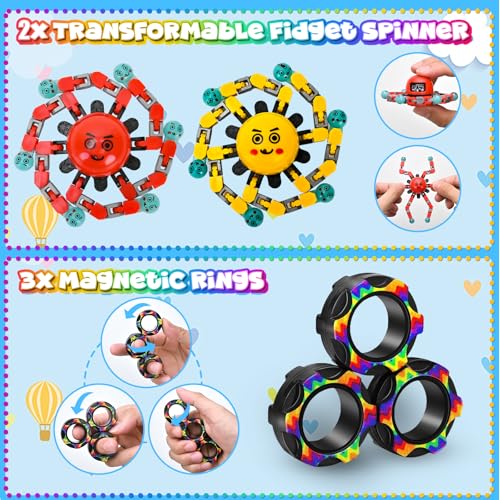

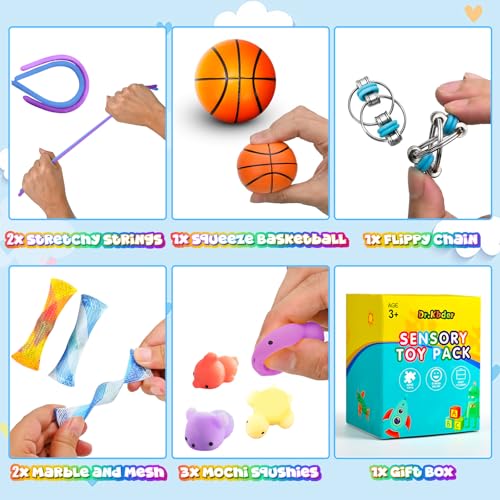
15Pack Fidget Toys Bulk for Adult Kids Age 5-7, 8-12, Sensory Autism Travel Must Have ADHD Autistic Figette Classroom Treasure Prize Box School Must Have Stress Anxiety Easter Basket Stuffers Gifts
- Sensory Fidgets Toys Bulk-- This 15 Pack Kit includes 1 Sensory Slug Worm Toy, 3pc Magnetic Rings, 1 Sensory B
- Sensory Toys for Autistic Children-- This set consists of an abundance of sensory toys and fidget toys that wi
- fidget classroom for kid-- These sensory toys are perfect for school classrooms, especially special education
What you can do today: Identify whether your child is primarily sensory-seeking or sensory-avoiding (or both) and choose one tool from each relevant category to trial for two weeks.
4. Understanding and Using School Support Plans
An IEP, 504 Plan, or EHCP is not a bureaucratic formality — it is a legally binding commitment from the school to your child.
U.S.: IEP vs. 504 Plan
| Feature | IEP (Individualised Education Program) | 504 Plan | |---|---|---| | Legal basis | IDEA | Section 504, Rehabilitation Act | | Who qualifies | Children needing specialised instruction | Children needing accommodations only | | Includes goals | Yes, measurable annual goals | No | | Reviewed | Annually (full review every 3 years) | Annually |
IEP tips:
UK: EHCP
The Education, Health and Care Plan replaced Statements of Special Educational Needs in 2014. Key points:
5. Supporting Emotional Wellbeing: More Than Behaviour Management
Neurodivergent children aged 5–8 are not "acting out" — they are communicating that something in their environment isn't meeting their needs.
By the time a child reaches school age, many neurodivergent children have already accumulated a backlog of confusing, frustrating, or overwhelming experiences. They may have internalised the message that they are "bad," "lazy," or "weird." Protecting and rebuilding their self-concept is as urgent as any academic intervention.
What Emotional Regulation Actually Looks Like at This Age
Children aged 5–8 are still developing the prefrontal cortex capacity to manage big emotions. For neurodivergent children, this development is often delayed by 2–3 years. That means your 7-year-old with ADHD may have the emotional regulation of a 4–5-year-old — not because they're immature, but because of how their brain is developing.
Practical strategies that work: - Co-regulation first: Your calm nervous system regulates theirs. Lower your voice, slow your movements, get to their eye level. - Name the feeling, not the behaviour: "You're furious that the game ended" rather than "Stop screaming." - Build a calm-down toolkit together: Let your child choose their own Yrissmiss sensory fidget ball or LESONG stretchy sensory strings for their calm corner at home. - Celebrate effort, not outcome: "I noticed you kept trying even when it was hard" builds resilience in a way "you're so smart" never can.


Sensory Autism Toys for Kids - Textured Stretchy Fidget Toys for Stress - Sensory Toys Special Needs for Autistic Toddlers Boys Girls Easter Baskets Stuffers Gifts, Treasure Prizes Classroom
- Sensory Toys for Kids: This fidget pack includes Stretchy noodles that glow in the dark, shimmer in the light,
- Fidget Toys: With even better sensory stimulation than the original. Each string has a unique texture and tens
- Quantity & Colors: The string noodles fidget toy set includes 8 stretchy strings with 8 colors,Each unit is 10
6. Strengths-Based Parenting: Reframing the Narrative
Your child's neurodivergent brain is not a broken version of a neurotypical brain — it is a different kind of brain with genuine strengths worth naming and nurturing.
The deficit-focused language of many diagnostic reports ("below average," "impaired," "disordered") can leave parents feeling devastated. But the same cognitive profiles that create challenges in a traditional classroom often come with remarkable strengths: hyperfocus, creativity, visual-spatial reasoning, empathy, pattern recognition, and out-of-the-box thinking.
Practical Strengths-Based Moves
7. Sensory Tool Comparison: Choosing the Right Fidget for Your Child
Not every sensory tool works for every child. This table maps common sensory needs to the most appropriate tools available.
| Sensory Need | Best For | Key Benefit | Drawback | Recommended Product | Price |
|---|---|---|---|---|---|
| Tactile seeking (touching everything) | Quiet classroom work, transitions | Redirects hands without distraction | May lose small pieces | KLT Sensory Stone Worry Stones | $6.99 |
| Proprioceptive seeking (can't sit still) | Desk work, reading time | Provides resistance movement while seated | Chair-specific setup | BouncyBand Stretch Band | $14.99 |
| Mixed sensory needs (variety required) | Classroom treasure box, travel | 15 different tools for different states | Some pieces not school-appropriate | Dr.Kbder 15-Pack Fidget Kit | $12.99 |
| Anxiety + repetitive behaviours | Homework, transitions, car rides | Silent, pocket-sized, replaces finger-picking | Small — supervision for young children | KLT Worry Stones | $6.99 |
| Visual + tactile seeking | Free play, calm corner | Colour-sorting and shape-building add cognitive layer | Less portable | Yrissmiss Sensory Fidget Ball | $5.99 |
| Stretch/pull seeking (oral or tactile) | Homework focus, anxiety peaks | Glows in dark, 7.5ft stretch, highly satisfying | Not for chewing | LESONG Stretchy Sensory Strings | $13.99 |


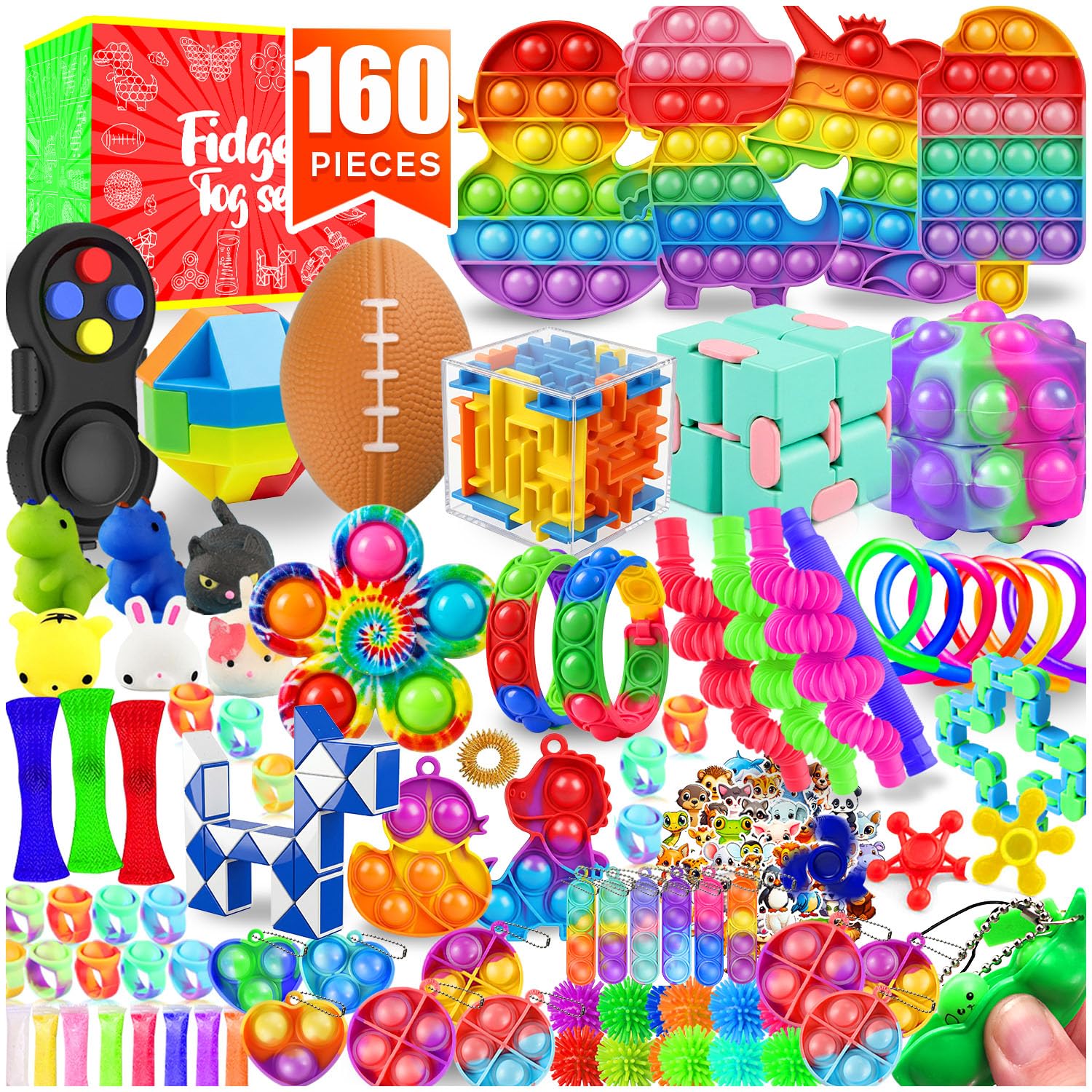
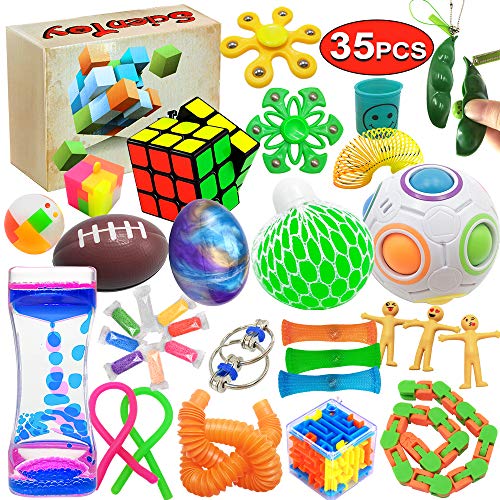
Fidget Toy Set, 35 Pcs Sensory Toy for ADD, OCD, Autistic Children, Adults, Anxiety Autism to Stress Relief and Anti Anxiety with Motion Timer, Perfect for Classroom Reward with Gift Box
- 【Super-Value 35 Packed Fidget Toys】Scientoy sensory toy set includes 35 pcs of novelty toys with an update of
- 【Respectable quality,Safe】Made of high-quality ABS material, non-toxic and odorless, the fidget toy set meets
- 【Gift Packed,Fidget Toys for Sensory kids】Scientoy sensory fidget toys come with 18 kinds of relaxing toys in
Expert Insights
How do I tell my child they have autism or ADHD?|Most child psychologists recommend honest, age-appropriate disclosure as early as possible. Use simple, strengths-based language: "Your brain works in a really interesting way — it's great at [strength], and sometimes it finds [challenge] harder than other brains do." Books like "My Brain is a Race Car" (ADHD) or "The Survival Guide for Kids with Autism Spectrum Disorders" can help open the conversation naturally.
Parenting a neurodivergent child in the early school years can feel like you're simultaneously fighting for your child, translating for the school, and trying to hold yourself together — often all before 8 a.m. It is genuinely hard. And it is also genuinely worth it.
The children who do best are not the ones whose parents had all the answers. They're the ones whose parents kept showing up, kept asking questions, and kept insisting that their child deserved to be understood.
Your child's brain is not a problem to be solved. It is a story still being written — and you are its most important author.
If this guide helped you, save it, share it with your child's teacher, or send it to a parent who's just starting this journey. You know someone who needs it.
Sources & References
- Centers for Disease Control and Prevention (CDC). "Developmental Disabilities." 2023. https://www.cdc.gov/ncbddd/developmentaldisabilities/index.html
- Centers for Disease Control and Prevention (CDC). "Data and Statistics on Children's Mental Health." 2023. https://www.cdc.gov/childrensmentalhealth/data.html
- American Academy of Pediatrics (AAP). "ADHD: Clinical Practice Guideline for the Diagnosis, Evaluation, and Treatment of Attention-Deficit/Hyperactivity Disorder in Children and Adolescents." Pediatrics, 2019. https://doi.org/10.1542/peds.2019-2528
- Individuals with Disabilities Education Act (IDEA). U.S. Department of Education. https://sites.ed.gov/idea/
- UK Government. "Children with Special Educational Needs and Disabilities (SEND)." Education, Health and Care Plans. https://www.gov.uk/children-with-special-educational-needs
- Hartanto, T.A., et al. "A trial-by-trial analysis reveals more intense physical activity is associated with better cognitive control performance in attention-deficit/hyperactivity disorder." Child Neuropsychology, 2016. https://doi.org/10.1080/09297049.2015.1044511
- Shonkoff, J.P., & Phillips, D.A. (Eds.). "From Neurons to Neighborhoods: The Science of Early Childhood Development." National Academies Press, 2000.
- Hallowell, E.M., & Ratey, J.J. "Driven to Distraction: Recognizing and Coping with Attention Deficit Disorder." Pantheon Books, 1994.
- IPSEA (Independent Provider of Special Education Advice). https://www.ipsea.org.uk/
- National Center for Learning Disabilities (NCLD). "State of Learning Disabilities." 2017. https://www.ncld.org/
Frequently Asked Questions
My child was just diagnosed with ADHD at age 6. Do they need medication right away?
What's the difference between sensory processing disorder (SPD) and autism?
My child's school says they don't qualify for an IEP. What are my options?
Are fidget toys actually evidence-based, or just trendy?
How do I support my neurodivergent child's friendships at this age?
My child melts down every day after school. Is this normal?
Was this helpful?
Thanks — your feedback helps us pick what to write next.