Physical Development: Bodies Built for Exploration
Between ages 2 and 3, toddlers make some of the fastest developmental leaps of their entire childhood — covering physical coordination, language, thinking, and emotional regulation all at once.

In this article
Your 2-year-old just knocked over a tower of blocks, burst into tears, rebuilt it, and then offered a piece to the dog — all in under three minutes. That whirlwind is toddler development in action.
Between the second and third birthdays, children undergo one of the most compressed periods of growth in human development. According to the Centers for Disease Control and Prevention (CDC), the 2–3 year window is when most foundational motor, language, and social skills lock into place — skills that predict school readiness and long-term wellbeing. Missing or delaying support during this window matters.
In this guide you'll understand:
1. Physical Development: Bodies Built for Exploration
Your toddler's body is designed to move, and between 2 and 3 years, that movement becomes noticeably more purposeful and controlled.
Growth Patterns
The World Health Organization (WHO) growth standards show that most children aged 2–3 gain approximately 2 kg in weight and 7–8 cm in height per year — a slower pace than infancy, but steady. Head circumference growth also slows, reflecting a brain that is consolidating rather than rapidly expanding new tissue.
Gross Motor Milestones
By age 3, most children can:
Fine Motor Milestones
When to talk to your paediatrician: If your child frequently falls when walking on flat ground, cannot run by 2.5 years, or shows no interest in holding crayons or small objects, bring it up at your next well-child visit. Early referral to a paediatric occupational or physiotherapist makes a meaningful difference.


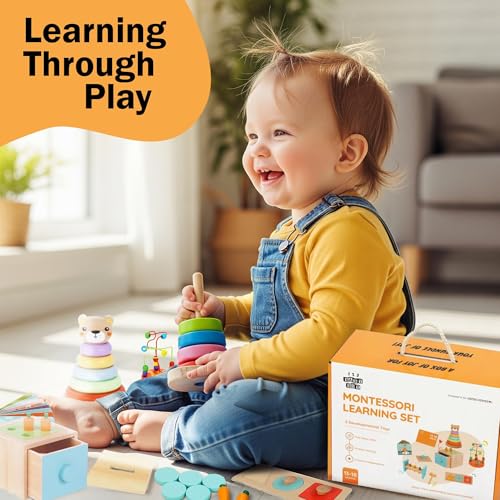
Yetonamr Montessori Toys for 1 2 3 Years Old Boys Girls Birthday Gifts, Wooden Sensory Toys for Ages 2-4 Toddlers Kids Baby, Toddler Learning Toy Activities Puzzles Ages 1-3
- SAFETY AND HIGH QUALITY: Toddler toys for young kids include high-quality, chunky wooden pieces to ensure tiny
- LEARNING THROUGH PLAY: This wooden sorting and stacking puzzle contains 20 pieces including blocks of 5 colors
- DESIGN FOR TODDLERS: Our montessori toy is an easy game that involves mounting one piece on top of the another
2. Cognitive Development: A Brain That's Starting to Plan
Toddlers aged 2–3 are not just reacting to the world — they are beginning to think about it.
What's Happening in the Brain
The prefrontal cortex, hippocampus, and language centres are all undergoing rapid synaptic pruning and myelination. In plain terms: your child's brain is streamlining its circuits, making thinking faster and more efficient. This is why you'll notice a leap in memory, attention, and problem-solving around the second birthday.
Cognitive Milestones to Watch For
How to Support Cognitive Growth
Reading aloud together remains one of the highest-yield activities you can do. The American Academy of Pediatrics (AAP) recommends reading with your child every single day from birth onward, noting that shared reading builds vocabulary, narrative comprehension, and attention simultaneously.
Sorting and matching games are equally powerful. A colour-matching busy book like the MUONE Montessori Busy Book lets toddlers practise classification, vocabulary, and fine motor control in one sitting. For number and shape recognition, the Play-Act Montessori Learning Farm Train combines counting and sorting in a format that feels like pure play.

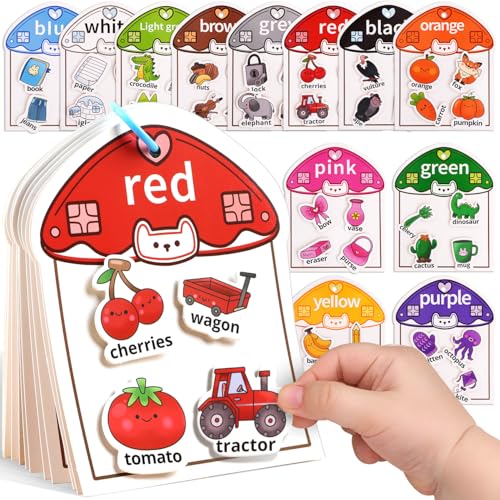
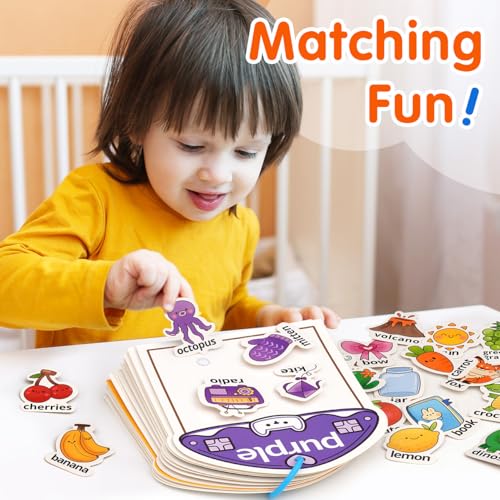
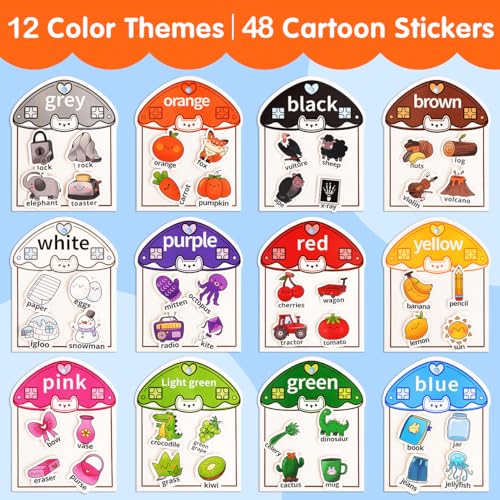
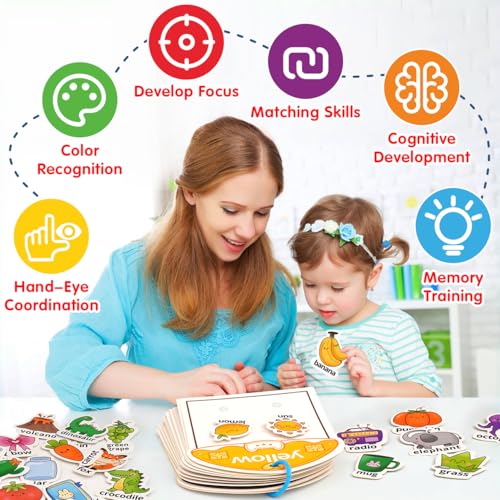
Montessori Busy Book Color Sorting Toys for Toddlers 2-4, Educational Preschool Learning Activities for Kids, Sensory Fine Motor Matching Games for 3 Year Old Boys Girls Gifts
- Matching Color Busy Book: Your toddlers will adore mastering 12 colors with our interactive busy book. They'll
- Build Essential Skills: Watch your child's mind grow! This engaging activity is far more than a sorting toys—i
- Spark Joyful Connections & Teamwork: "Wow, you found the red tomato! Great job, sweetie!" This busy book is de
3. Language and Communication: The Vocabulary Explosion
Language development between 2 and 3 is genuinely staggering — and it's one of the clearest windows into your child's overall development.
What the Numbers Look Like
The CDC's Developmental Milestones guidelines indicate that by age 2, most children use at least 50 words and are beginning to combine two words ("more milk," "daddy go"). By age 3, that vocabulary typically reaches 200–300+ words, and children are forming three-word sentences and asking "why" questions relentlessly.
Language delays are among the most common developmental concerns in the toddler years and are also among the most responsive to early intervention.
— American Academy of Pediatrics (2022)
Speech Milestones at a Glance
Red Flags Worth Raising
Talking flash cards like the Airbition Talking Flash Cards can supplement daily conversation — the sound-image pairing mimics the Montessori input style and is particularly useful for children who are visual learners or receiving speech therapy support.



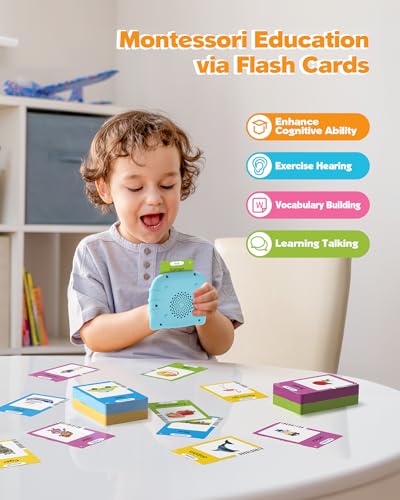

Airbition Talking Flash Cards for Toddlers 1 2 3 4 Year Olds, Montessori Language Learning Toys with 224 Words, Pocket Speech Therapy Toys, and Speech Development Educational Playthings for Children
- Toddler Montessori Learning Toys: This educational talking flash card features 224 colorful illustrations and
- Speech Therapy and Sensory Toys: Talking flashcards are a valuable tool for children. The sound-image combo he
- Easy to Use: Simply turn on the switch, insert a card into the reader, and hear content in a standard American
4. Emotional and Social Development: Big Feelings, Small Body
If you've survived a supermarket meltdown over the wrong colour cup, you already understand the central challenge of toddler emotional development: your child's feelings are enormous, and their ability to manage those feelings is still very much under construction.
The Neuroscience Behind Tantrums
The amygdala — the brain's alarm system — is fully online in toddlerhood. The prefrontal cortex — which provides rational override — is not. This mismatch is biological, not behavioural. Tantrums are not manipulation; they are a nervous system overwhelmed by emotion it cannot yet regulate.
Social and Emotional Milestones
Supporting Emotional Regulation
- Name emotions out loud: "You're really frustrated that the puzzle won't fit. That's hard." - Stay calm yourself: Co-regulation precedes self-regulation. Your nervous system helps regulate theirs. - Offer limited choices: "Do you want to put your shoes on first or your coat?" restores a sense of control without opening every decision to negotiation.
Role-play toys support social-emotional learning beautifully. The Mr. Potato Head Set encourages creative expression and cause-and-effect thinking, while the VTech Drill and Learn Toolbox supports pretend-play scenarios that build narrative and social skills.
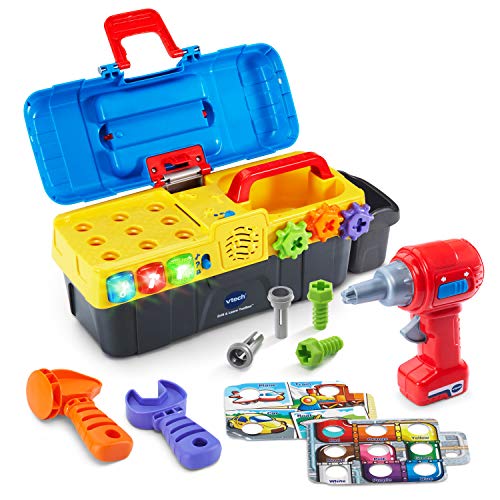


VTech Drill and Learn Toolbox
- Fix and play with the Drill and Learn Toolbox by VTech; open this toddler-friendly toolbox and get ready for r
- Working drill spins the gears and drills screws into the electronic tray's holes; turn the gears to build moto
- Press light-up buttons for fun songs and to learn about a variety of tools, how they're used and the sounds th
5. Play: The Engine Driving Every Domain
Play is not a break from learning — for a 2–3 year old, play is learning, and the research on this is unambiguous.
Types of Play and What They Build
| Play Type | What It Develops | |---|---| | Sensory / exploratory | Tactile processing, curiosity | | Constructive (blocks, stacking) | Spatial reasoning, persistence | | Pretend / symbolic | Language, theory of mind, creativity | | Physical / active | Gross motor skills, body awareness | | Social (with peers or caregivers) | Turn-taking, empathy, communication |
The AAP's 2018 clinical report on the power of play explicitly recommends that paediatricians prescribe play as a health-promoting activity, noting that child-led play with engaged caregivers is associated with better language outcomes, reduced stress hormones, and stronger parent-child attachment.
The Play-Act Montessori Farm Train and Yetonamr Wooden Sensory Puzzle are both well-suited to constructive play that spans cognitive, fine motor, and language domains simultaneously.
6. Health, Nutrition, and Sleep: The Foundations Under Everything
Development doesn't happen in a vacuum — it runs on sleep, food, and a body that feels well.
Nutrition at 2–3 Years
Toddler appetites are notoriously unpredictable. The AAP and WHO both note that food neophobia (refusing new foods) peaks between ages 2 and 6 — this is normal evolutionary behaviour, not fussiness. Strategies that work:
Key nutritional priorities: iron-rich foods (meat, legumes, fortified cereals), calcium (dairy or fortified alternatives), omega-3 fatty acids for brain development, and adequate vitamin D (supplementation is often recommended — check with your paediatrician).
Sleep at 2–3 Years
The National Sleep Foundation recommends 11–14 hours of total sleep per 24 hours for children aged 1–2, and 10–13 hours for ages 3–5. Most 2–3 year olds still benefit from one daytime nap, though nap resistance often increases toward the third birthday.
Consistent bedtime routines — bath, books, bed — reduce sleep-onset time and improve overnight sleep quality. A predictable routine also supports emotional regulation the following day.


Mr. Potato Head Mr. Potato Head Set with 13 Parts and Pieces, Toddler and Preschool Toys for 2 Year Old Boys and Girls and Up
- CREATIVE MIX AND MASH FUN: Explore a world of wacky fun with Mr. Potato Head! With 13 parts and pieces to mix
- 13 POTATO HEAD PARTS AND PIECES: This preschool and toddler toy includes 1 potato body and 12 Potato Head acce
- TATER TUSH COMPARTMENT FOR CONVENIENT STORAGE: The large compartment door on the back of the potato body makes
Toddler Development Toy Comparison: Which Play Tool Fits Your Goal?
| Developmental Goal | Best Age in Range | Key Skill Targeted | Complexity Level | Recommended Product | Price |
|---|---|---|---|---|---|
| Colour & number sorting | 2–3 years | Cognitive + fine motor | Low–Medium | Play-Act Montessori Farm Train | $21.99 |
| Colour matching & vocabulary | 2–4 years | Language + fine motor | Low | MUONE Montessori Busy Book | $8.95 |
| Shape & spatial reasoning | 1–3 years | Fine motor + problem-solving | Low | Yetonamr Wooden Sensory Puzzle | $8.98 |
| Speech & vocabulary building | 1–4 years | Language + cognitive | Low | Airbition Talking Flash Cards | $9.99 |
| Creative & pretend play | 2+ years | Creativity + social-emotional | Low | Mr. Potato Head Set | $6.49 |
| Role play & motor skills | 2+ years | Pretend play + gross/fine motor | Medium | VTech Drill and Learn Toolbox | $27.99 |
Expert Insights on Toddler Development
The Bottom Line
The toddler years between 2 and 3 are loud, exhausting, hilarious, and — underneath the chaos — profoundly purposeful. Every time your child lines up toy animals, narrates a pretend tea party, or dissolves into tears because their banana broke, their brain is doing serious developmental work.
You don't need a curriculum or a schedule packed with enrichment classes. You need warm, responsive presence; daily reading and conversation; safe space to move; and the confidence to call your paediatrician when something doesn't feel right.
The best thing you can give your toddler is a caregiver who pays attention.
If this guide was useful, save it for your next well-child visit, share it with your co-parent or childminder, and subscribe to tinymindsworld.com for age-by-age guidance as your child grows.
Sources & References
- Centers for Disease Control and Prevention. "Developmental Milestones: 2 Year Old." 2023. https://www.cdc.gov/ncbddd/actearly/milestones/milestones-2yr.html
- Centers for Disease Control and Prevention. "Developmental Milestones: 3 Year Old." 2023. https://www.cdc.gov/ncbddd/actearly/milestones/milestones-3yr.html
- World Health Organization. "WHO Child Growth Standards." 2006, updated 2023. https://www.who.int/tools/child-growth-standards
- World Health Organization. "Guidelines on Physical Activity, Sedentary Behaviour and Sleep for Children Under 5 Years of Age." 2019. https://www.who.int/publications/i/item/9789241550536
- American Academy of Pediatrics. "The Power of Play: A Pediatric Role in Enhancing Development in Young Children." Pediatrics, 2018. https://doi.org/10.1542/peds.2018-2058
- American Academy of Pediatrics. "Language Delays in Toddlers: Information for Parents." 2022. https://www.healthychildren.org/English/ages-stages/toddler/Pages/Language-Delay.aspx
- American Academy of Pediatrics. "Where We Stand: Screen Time." 2023. https://www.healthychildren.org/English/family-life/Media/Pages/Where-We-Stand-TV-Viewing-Time.aspx
- National Sleep Foundation. "Sleep Duration Recommendations." 2015. https://www.sleepfoundation.org/how-sleep-works/sleep-duration-recommendations
- Shonkoff, J.P. & Phillips, D.A. (Eds.). "From Neurons to Neighborhoods: The Science of Early Childhood Development." National Academy Press, 2000.
- Harvard Center on the Developing Child. "Serve and Return Interaction Shapes Brain Circuitry." 2023. https://developingchild.harvard.edu/science/key-concepts/serve-and-return/
Frequently Asked Questions
Is it normal for my 2-year-old to have tantrums every day?
My 2.5-year-old only says about 30 words. Should I be worried?
When should my toddler start playing with other children?
How much screen time is okay for a 2–3 year old?
My 3-year-old still isn't potty trained. Is that a problem?
What are the earliest signs of autism in a 2–3 year old?
How do I know if my toddler's development is on track overall?
Was this helpful?
Thanks — your feedback helps us pick what to write next.